Buying guide
Combi drill vs SDS: shelves, brick and concrete decision guide
A combi drill is a versatile candidate for mixed drilling and fastening, including suitable occasional masonry tasks within its rated capability.
An SDS rotary hammer is the specialist to investigate for repeated concrete drilling or harder masonry tasks where a conventional combi is not appropriate.
Choose the tool class from the material, hole and workload before comparing torque, battery size or brand.
This guide supports tool selection, not a complete drilling procedure. Check for hidden services, hazardous materials and structural restrictions before work, use appropriate protective measures and follow the exact tool, bit and fixing instructions.
If the substrate or risks are uncertain, seek qualified help rather than experimenting with a more powerful tool.
What the names describe
A combi drill combines ordinary rotary drilling with a percussion setting for suitable masonry work. An SDS rotary hammer uses a different impact mechanism and an SDS bit-retention system designed for its intended tasks.
The difference is more substantial than one product having a larger torque number.
SDS also describes interface families, not one universal fitting for every rotary hammer. Check the exact tool and bit system. A bit which looks similar is not necessarily compatible, and adapters can have restrictions on which operating modes are permitted.
For a concrete manufacturer example, Bosch's GBH 2-26 product information provides model-specific capacities and modes.
Use the technical information for the exact product being considered rather than assuming every SDS machine shares those specifications.
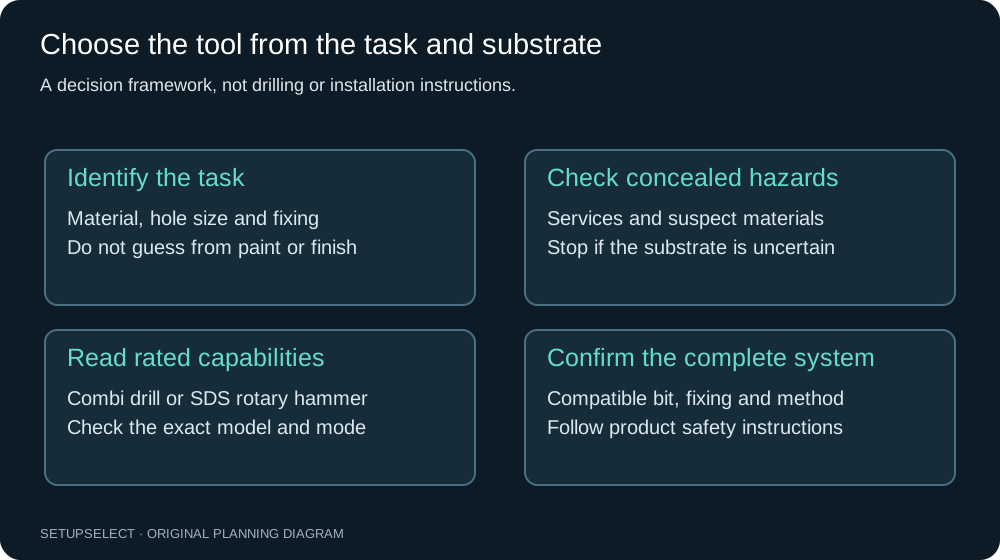
Start with the material
Wood, metal, plasterboard, brick and concrete are not interchangeable drilling tasks. A wall's visible finish may hide a different substrate, services or materials requiring specialist handling.
Establish what is behind the surface before choosing a mode or fixing.
Do not use the fact that a bit initially enters the wall as proof that the substrate is understood. Unexpected resistance can indicate several things, including a service or reinforcement.
Stop and investigate appropriately rather than applying more force or switching to a stronger tool by default.
The fixing system also matters. A shelf, cabinet or fixture requires a suitable fixing design for the load and substrate, not just a hole made by the available drill.
Follow the fixing manufacturer's requirements and obtain professional advice for uncertain or consequential installations.
Define diameter, depth and workload
Record the required hole diameter and depth, the number of holes and the material. Compare these with the exact tool's rated capacities and the bit's intended use.
A tool suitable for a small occasional hole may be a poor choice for repeated larger holes in a harder material.
Workload affects the practical decision. A few suitable holes during occasional household work may favour a versatile combi, while repeated concrete work can justify investigating an SDS rotary hammer.
That is not a universal threshold based on a fixed hole count; the actual task and manufacturer limits decide.
Avoid choosing solely from a maximum capacity printed in a product summary. Read any conditions, recommended ranges and permitted modes. A maximum figure does not establish that every job below it is equally convenient or appropriate.
Scenario one: assembling furniture and drilling timber
If the work is primarily screws, furniture assembly and suitable wood drilling, an SDS rotary hammer is usually not the first tool class to investigate. A drill driver or combi with appropriate bits and control may serve the mixed task more directly.
Check the fastener and material requirements rather than using hammer mode indiscriminately.
Control and access can matter more than maximum power. Consider the size of the tool in the available space, the supported speed and clutch functions, and whether the workpiece can be secured appropriately.
Do not use a heavy specialist tool merely because it has the largest specification.
The combi-versus-drill-driver guide explains the simpler class distinction. If masonry is not part of the foreseeable work, paying for additional functions may not address a real need.
Scenario two: shelves on a verified masonry wall
For a shelf installation, first establish the substrate, hidden-service risks, load and suitable fixing system. If the task involves occasional smaller masonry holes within a combi's stated capability, a suitable combi may be a candidate.
That does not approve any specific wall or fixing arrangement.
Choose bits and operating modes according to the tool and material instructions. Do not treat hammer mode as the default for every surface finish.
Tiles, brittle materials and other conditions can require different methods or specialist advice which a general tool comparison cannot replace.
If the tool struggles, stop to assess the cause rather than pushing harder. The issue might be an unsuitable or worn bit, a misidentified substrate, an inappropriate mode or an obstruction.
Buying a stronger tool without understanding the task can increase the risk rather than solve it.
Scenario three: repeated concrete drilling
Where the task is repeated drilling in verified concrete, an appropriately specified SDS rotary hammer is worth investigating. Compare the model's rated concrete capacity, supported bit system, modes and handling requirements.
Impact energy can be relevant, but it is not a complete performance or suitability score.
Consider dust control, noise, vibration and the duration of the task. These are part of tool selection and work planning, not optional extras to be addressed after the holes are started.
For occupational use, follow applicable workplace requirements and competent advice.
If this is a one-off specialist task, hiring suitable equipment or engaging a professional may be more sensible than buying the cheapest tool with an SDS label.
The decision should include the equipment, consumables, control measures and competence needed to complete the work appropriately.
| Task description | Class to investigate | Evidence still needed |
|---|---|---|
| Furniture and general fastening | Drill driver or suitable combi | Fastener control, access and material requirements |
| Occasional suitable masonry holes | Combi or SDS depending on actual task | Substrate, diameter, depth and model capacity |
| Repeated concrete drilling | Suitable SDS rotary hammer | Bit system, rated capacity and control measures |
| Chiselling | Only a tool explicitly supporting the required mode | Permitted accessory and operating instructions |
Do not compare torque with impact energy
Combi listings often emphasise torque in newton-metres, while rotary-hammer information may emphasise impact energy in joules and material-specific drilling capacity. These are different quantities.
Ranking tools by placing them in one numerical column creates a misleading comparison.
Also distinguish a drill's maximum torque from its clutch settings and practical control. A large figure does not mean the tool is suitable for every screw or substrate.
See drill torque explained for the terminology, then use the actual task requirements to interpret it.
For SDS products, impact energy alone does not establish speed, handling, dust control or suitability for a particular hole. Compare the complete specification and instructions rather than selecting the highest number in the price range.
Bits, chucks and adapters
Use the bit type and shank system supported by the exact tool and intended mode. Conventional round-shank bits, SDS-plus and other interfaces are not interchangeable merely because an adapter exists.
Read the adapter and tool restrictions, especially around hammer operation.
Check the bit's material suitability, diameter, working length and condition. A bit too short for the intended depth or unsuitable for the substrate can undermine an otherwise appropriate tool choice.
Replace damaged or worn components according to the manufacturer's advice.
Do not improvise retention or use a partially engaged bit. Follow the fitting and checking procedure in the manual. If the instructions are missing or do not match the tool, obtain the correct documentation before use.
Battery platform and corded options
An existing battery platform can reduce the cost of a compatible cordless tool, but only if the batteries and charger are approved for the exact model.
Similar voltage labels or physical resemblance do not establish cross-brand or cross-generation compatibility.
Compare the complete purchase: bare tool, suitable batteries, charger, bits and required accessories. A low bare-tool price can become a much higher ready-to-work cost.
Conversely, buying another battery platform for a single occasional task may add unnecessary storage and maintenance.
Corded equipment may suit some workloads, but introduces cable routing and power requirements. Follow the equipment instructions and appropriate electrical precautions. This guide does not select an extension arrangement or certify a worksite supply.
Handling, access and control
Measure the working space and consider whether the tool can be held and controlled appropriately for the intended task. Weight, balance, handles and access matter.
A more powerful or heavier model can be a poor choice in a cramped position even when its capacity exceeds the requirement.
Use any required auxiliary handle and control features according to the instructions. Do not work from an unstable position or defeat safety features to reach a difficult angle.
If the access cannot be made appropriate, seek a different method or professional help.
Consider how the equipment will be stored and maintained. Keep bits and accessories identified so the next job does not begin with uncertain compatibility. A simple labelled kit is more useful than a large mixed collection whose intended uses are unclear.
Dust, noise and vibration
Drilling can generate hazardous dust, noise and vibration depending on the material and task. Identify the risks before work and use suitable control measures and protective equipment according to competent guidance.
Do not assume a small household job is free of risk or that a domestic vacuum is suitable for every dust.
For relevant background, see HSE guidance on construction vibration.
Its occupational context should be understood, and the exact material and task may require additional guidance. This article does not calculate safe exposure times.
If hazardous materials or hidden services may be present, stop and obtain appropriate assessment. Tool power and bit selection are not substitutes for knowing what is being drilled.
The safest purchasing decision may be not to proceed with an uncertain task yourself.
Buy, hire or use a professional
For repeated suitable DIY tasks, owning a versatile tool can be practical.
For an occasional specialist concrete job, hire may provide access to an appropriate class without long-term storage, but still requires competence, correct accessories and understanding of the instructions.
A professional may be the right choice where the substrate, load, services or access create uncertainty. Include the consequences of an incorrect hole or fixing in the decision, not just the tool's purchase price.
A low-cost drill is not a saving if it leads to damaged services or an unsuitable installation.
Compare total ready-to-work costs and responsibilities. Hiring does not remove the need for control measures, and buying does not confer the knowledge required for every task. Choose the route that addresses both equipment and competence.
A pre-purchase checklist
- Identify the actual material and investigate hidden-service or hazardous-material risks.
- Record hole diameter, depth, quantity and the fixing requirements.
- Select the appropriate class before comparing brands or battery platforms.
- Verify exact rated capacities, bit interfaces and permitted modes.
- Include dust, noise, vibration, handling and access in the plan.
- Compare buying, hiring and professional work where the task justifies it.
Compare the complete job cost
For an occasional task, compare the total cost of an appropriate tool, compatible consumables and any required accessories with suitable hire or professional work.
A low tool-only price may not represent a usable solution if the supplied kit lacks what the task requires.
Check the exact contents of a cordless bundle. Body-only, battery-and-charger and multi-tool packages are different offers, and belonging to the same broad battery voltage category does not establish cross-brand compatibility.
Use the manufacturer's compatibility information for the specific system.
Do not let an existing battery collection decide a task the tool is not rated to perform. If the substrate, fixing design or concealed hazards remain uncertain, resolving those questions is more important than choosing between two attractive bundles.
The right purchasing decision can be to postpone the tool purchase until the job is properly specified.
Questions and next step
Can a combi drill concrete? Some tools support specified concrete or masonry tasks, but the exact capacity, material and workload matter.
Do not treat the class name as universal approval. Is SDS better for everything? No; it is a specialist choice, not automatically the best tool for furniture, screws or every delicate surface.
Can an impact driver replace either? It is a different tool class with its own intended uses; see impact driver versus combi. Does an SDS label guarantee chiselling? No; verify the model's modes and supported accessories.
Use the drill finder and SDS selector to organise requirements, then verify the exact manual.
The examples here are research-based selection scenarios, not hands-on tool tests, installation instructions or approval for a particular wall.
Continue researching